Can AI make smart living more human?

If we want to be at the forefront of creating digitally managed spaces for human life, we need to understand and actively seek out opportunities to utilize modern tools, such as AI, in our solutions.
But in the minds of many users, there is still a certain conflict between security and open use of AI in everyday life. This does not need to be the case. AI is for the people.
Integration without security concerns
For AI it to work in access management in the way we envision, we need to normalize and accept deep integration of systems and sharing of information within specified ecosystems. This does not mean sharing sensitive personal data with open platforms, but the utilization of secure, closed and highly customized AI solutions within, for example, building-wide ecosystems. When everyone is clear on the common rules, there is nothing to fear. AI is already being utilized in understanding and catering to people flows in buildings.
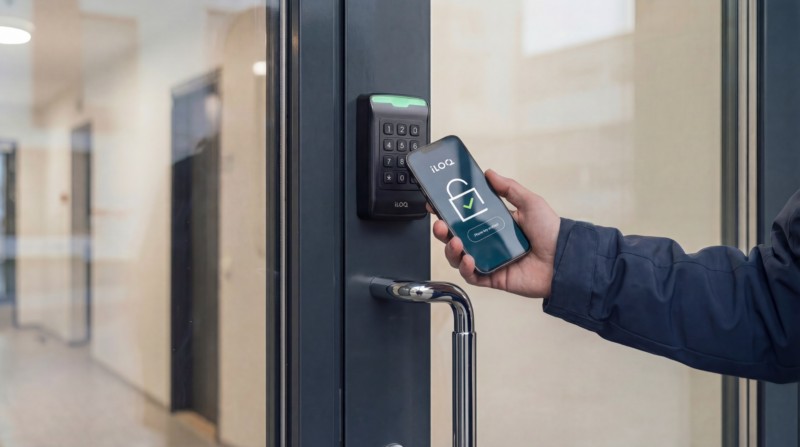
The integration and automated utilization of such understanding in smart locking is a natural future extension. There is no reason or technological barrier why your home couldn’t already today anticipate your arrival and open the door and put the kettle on for you. iLOQ’s solutions have been developed to allow for this type of integration and open interfacing, enabling locking to become a seamless part of the smart-living experience of tomorrow, or in fact today. The cybersecurity and authentication measures behind the iLOQ solution give me the confidence to move forward.
Creating win-win scenarios with AI
It’s also worth noting that AI applications are not all fantastical and futuristic in any way. Most uses are very mundane and common sensical. AI workflows allow for a much easier and effortless user experience for both tenants and building management. This simply means that AI can be utilized to incorporate different parts of, for example, space reservation systems. These automated workflows improve the user experience and efficiency of operations from the perspective of building owners and management, not to mention the different service providers within the building ecosystem.
A typical AI-powered chain of events could run from a person reserving a shared space within a building, to all appropriately associated people being granted mobile access rights for the defined period of time, to the automated billing of the space rental and potential extras being allocated to the correct person/account; This is how AI workflows can work across platforms, in this example at least three of them, to create a seamless user experience and virtually instant chain of events that eliminates manual work behind the scenes. And it also save costs, time and resources.
Making digital locking more human
Technology should never be developed for the sake of developing technology. The driver behind what we do at iLOQ is the people and businesses that benefit from our digital-locking solutions. Firstly, as described above, our solution allows building owners and managers to provide tenants with clear added value and comfort of living in and using spaces while making life easier and more efficient on the back end.
But perhaps even more important for us has been the need to understand how the modern person lives and interacts with the spaces they inhabit and services they consume – from their homes to schools, offices, shopping, entertainment and public services from libraries to mass transit. This human aspect must be the force behind the development of smart living of the future. Personally, as the father of teenagers, I look forward to the feature that will alert me when my kids give mobile access to our home to more than ten of their friends on a Friday night when I’m out of town. It is these kinds of very human scenarios that I want to see iLOQ help solve for its users.
The possibilities of AI to improve the human experience are virtually unlimited, and that makes me excited for the future.