Smart cylinder explained
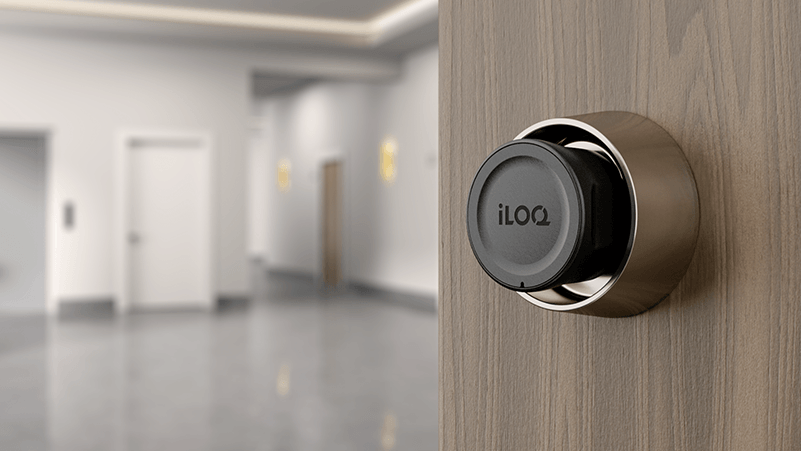
A smart cylinder is one of the clearest ways to modernize door access without changing everything around it. Instead of relying only on a traditional mechanical key, a smart cylinder adds digital access, more flexible management, and a smoother user experience to a familiar door format. For many buildings, that means better day-to-day convenience, stronger control over who can enter, and a practical path toward smart living without turning the project into a major renovation.
People searching for a smart cylinder are often not just looking for a single product. They are also trying to understand what a cylinder actually is, what makes an electronic cylinder smart, how it works, where it makes sense, and what kind of solution best fits their building. That’s why clear, straightforward information matters. “Smart cylinder” can mean different things depending on the lock type, the access method, and the environment, so customers need more than a product name. They need context.
For iLOQ, the smart cylinder is part of a broader smart-locking approach. The cylinder itself matters, but so do the access rights behind it, the software used to manage it, and the range of credentials that can work within the same system. Depending on the setup, access may involve a smartphone, smart key, key fob or a PIN code. That wider view is important, because most customers are not simply buying a cylinder. They are choosing a smarter way to manage access across a property, business, or site.
This article explains what a smart electronic cylinder is, how it works, where it is best used, and how iLOQ’s offering fits into the category.
What is a smart electronic cylinder?
A cylinder is the core part of many door locks. It is the section that recognizes the key and allows the lock to turn when the correct credential is used. In homes, apartment buildings, offices, public buildings, and technical spaces, cylinder locks are already a familiar and widely used format.
A smart electronic cylinder takes that familiar format and upgrades it with digital functionality. Instead of working only with a traditional cut key, it becomes part of a managed access system. That means the door can be opened with an approved digital credential, such as a smartphone, smart key, key fob, or PIN code, depending on the solution.
What makes it smart is not just the presence of electronics. A lock becomes smart when access can be managed in a more flexible and intelligent way. In a mechanical setup, a key either works or it does not. In a smart system, access rights can be created, updated, limited, scheduled, or canceled through software. That makes the cylinder part of a wider access strategy rather than just a piece of door hardware.
This difference matters in real life. If a tenant moves out, a staff member changes role, or a contractor needs temporary access, a mechanical system usually means more manual work. A smart cylinder can make those changes much easier to handle. It can also support a better user experience by offering access methods that fit modern habits and modern properties.
From an iLOQ perspective, the smart cylinder is also about practical modernization. It is not only about making a door digital. It is about doing so in a way that supports secure access, easier management, and smart living while still fitting into existing environments. iLOQ’s smart cylinders are battery-free. Depending on the solution, the energy needed for unlocking comes either from the kinetic energy created when inserting an iLOQ key, or from the NFC field created by a smartphone or key fob. That means the cylinder itself does not need batteries, which helps reduce maintenance while keeping the solution simple and cable-free.
How does a smart cylinder work?
A smart cylinder works by recognizing an approved credential and allowing access only when the user has the right permissions. The exact method depends on the solution, but the basic logic is simple. The cylinder checks whether the credential is valid, whether the user has the correct rights, and whether access should be granted at that moment.
In practice, that means the system usually involves three parts. First, there is the cylinder itself in the door. Second, there is the credential used by the person entering, such as a smartphone, smart key, key fob, or PIN. Third, there is the management layer that controls access rights and keeps the whole system organized.
This management layer is a big part of what makes the cylinder smart. Instead of treating access as fixed, the system allows administrators to decide who can enter which spaces, at what times, and under what conditions. Rights can be adjusted as needs change, which is a major advantage over purely mechanical systems.
In iLOQ’s case, different smart cylinder solutions are powered in different ways. With iLOQ’s smart-key-based system, the energy needed for unlocking is generated from the kinetic energy created when the key is inserted into the lock. With smartphone-based access, the required energy comes from the NFC field created by the phone, and the same principle also applies to the key fob. This means the cylinder itself stays battery-free, which helps reduce maintenance and avoids the need for battery changes in the lock.
From the user’s perspective, the experience should still feel simple. They present the approved credential, the cylinder recognizes it, and the door opens if access is allowed. Behind that simple moment, however, there is a much more advanced access model that gives administrators better control and gives users a more modern experience.
Advantages of a smart door lock cylinder
One of the main advantages of a smart door lock cylinder is convenience. People no longer need to rely only on traditional keys, and in the right setup they can use a smartphone or another managed credential to move through authorized spaces. For residents, staff, and service users, that can make daily access feel smoother and more natural.
Another major benefit is easier access management. In a mechanical system, giving someone access often means physically handing over a key, tracking it, and hoping it is returned. In a smart system, access rights can be managed more flexibly. That makes it easier to deal with staff changes, new residents, contractors, visitors, and temporary access needs without the same level of manual work.
A smart cylinder can also support better control. If access needs to be changed, it can be updated through the system rather than by replacing large numbers of physical keys. That improves responsiveness and helps organizations react faster when circumstances change.
Maintenance can be another major advantage. This is especially true when the solution is designed without batteries in the lock and without heavy wiring requirements. In larger properties or distributed environments, reducing ongoing maintenance can make a real difference over time, both operationally and financially.
Smart cylinders also support scalability. A customer may begin by upgrading one entrance or one set of doors, but over time the need often expands. They may want to include apartment doors, shared entrances, office spaces, technical rooms, or other controlled access points. A smart cylinder can become part of a wider system rather than remaining a one-off product.
There is also a lifestyle benefit, especially in residential settings. Smart access supports smart living by making entry simpler, more flexible, and easier to manage. For residents, that can mean a smoother daily experience. For property owners and managers, it can mean offering a more modern and attractive way of living, while keeping access secure and manageable.
Security is another important advantage, even if it is not the only one. When physical keys go missing, are copied, or are not returned, the consequences can be difficult to control. A smart cylinder does not remove security concerns entirely, but it gives administrators much better tools to manage them. That alone is a strong reason many organizations are moving away from purely mechanical systems.
Where smart cylinders work best
Smart cylinders work best in environments where customers want the familiarity of a cylinder lock but the benefits of digital access. Because cylinder-based doors are already common in many building types, the smart cylinder is often one of the most practical ways to move from mechanical locking to a smarter access model.
Residential properties are one of the clearest examples. Apartment buildings, rental properties, student housing, and other shared living environments often need a better balance between convenience, control, and administration. Smart cylinders can help residents enjoy easier access while helping property managers handle permissions more efficiently. They also fit naturally into wider smart living strategies, where digital convenience and easier everyday use matter.
Housing companies and property managers are another important audience. For them, the value is often less about the novelty of mobile access and more about reducing manual work. Managing move-ins, move-outs, lost credentials, service access, and shared entrances becomes easier when access rights can be handled through a digital system rather than through large sets of physical keys.
Commercial properties and offices are also strong use cases. In these environments, access may need to change regularly based on role, schedule, or area of responsibility. Smart cylinders can help manage employees, visitors, contractors, and service teams in a more flexible way while keeping the user experience simple at the door.
Small businesses may also benefit, especially when they want a modern access solution without unnecessary complexity. A smart cylinder can offer a cleaner and more manageable alternative to traditional key handling, while still fitting into the normal door hardware people already understand.
Public buildings and shared-use environments can benefit too. Schools, municipal buildings, healthcare facilities, and similar environments often involve multiple user groups with different access needs. In those settings, a centrally managed smart cylinder system can offer a better balance of convenience and control.
Technical spaces, utility environments, and distributed sites may also use smart cylinders where cylinder-based doors protect service rooms, equipment spaces, or controlled areas. In these cases, the priorities are often reliability, low maintenance, and easier management across multiple locations.
The strongest use case depends on the customer. Residents may care most about convenience and smart living. Property managers may focus on administration and lifecycle cost. Businesses may want flexibility and control. Technical environments may care about reliability and reduced maintenance. A smart cylinder works best when it can support those priorities without making the user experience more complicated.
Types of smart electronic cylinders
There is no single type of smart electronic cylinder. Even within the cylinder category, products can vary based on the access method, door type, cylinder format, and wider system design. That is why it is useful to think in categories rather than assume every smart cylinder does the same job.
One common distinction is between smartphone-based cylinders and smart-key-based cylinders. Smartphone-based cylinders are designed for users who want access through a mobile credential, while smart-key-based cylinders use a programmable digital key. Both approaches can be effective, and the right choice depends on the environment, the user group, and the wider access model.
Another distinction is the physical format of the cylinder itself. Different doors require different cylinder types, so a smart cylinder solution is not only about the digital side. It also needs to match the actual hardware requirements of the opening. In practice, this may include standard door cylinders, half cylinders, knob cylinders, and other variants designed for specific door functions.
There is also the wider system context. Some smart cylinders are part of a single-access method setup, while others are designed to sit inside a broader smart-access platform. This matters because many customers do not actually want one isolated smart door. They want a flexible system where some users may enter with a smartphone, others with a smart key or key fob, and some access points may be better served by a PIN-based solution.
That is where iLOQ’s offering becomes especially relevant. iLOQ’s smart-cylinder approach is not only about replacing one mechanical cylinder with one electronic cylinder. It is about giving customers cylinder-based solutions that can fit different environments and work within a wider access ecosystem. That makes the solution more adaptable over time and more useful across real-world properties.
For customers exploring the category, the key question is not simply which smart cylinder exists. It is which type of smart cylinder fits the door, the users, the maintenance expectations, and the broader access needs of the site.
FAQs
Are digital cylinders easy to install?
Often, yes. Many digital cylinders are designed to fit existing doors without major changes. The exact level of work depends on the door, the cylinder format, and the wider system, but in many cases they can be a practical retrofit option.
Are smart cylinder locks secure?
Yes, they can be highly secure when they are part of a properly managed digital access system. The key point is that security comes not only from the cylinder itself, but from the combination of hardware, managed credentials, and the ability to control access rights more effectively than in a purely mechanical setup.
Do smart cylinders only work with smartphones?
No. Some do, but many smart cylinder solutions support several credential types. Depending on the system, access may involve a smartphone, a smart key, a key fob, or a PIN code. That flexibility can be especially useful in mixed environments where different users need different ways to access the same property.
Do smart cylinders need batteries or wiring?
Not always. Some do, but not all. One of iLOQ’s strengths is that its smart cylinders are battery-free. Depending on the solution, the energy needed for unlocking comes either from the kinetic energy of an iLOQ key or from the NFC field created by a smartphone or key fob. This helps reduce maintenance and avoids battery changes in the cylinder itself.
What happens if a phone or smart key goes missing?
In a digitally managed system, access rights can be updated or canceled much more easily than in a traditional mechanical setup. That gives administrators better control and makes it easier to respond when a credential is lost or no longer needed.
Are smart cylinders only for residential use?
No. They can be used in residential buildings, offices, public buildings, and many technical or infrastructure environments. The right fit depends on the door, the users, and the wider access needs of the site.
Can smart cylinders support smart living?
Yes. In residential settings especially, smart cylinders can support smart living by making daily access easier, more flexible, and easier to manage for both residents and property managers. They help bring digital convenience to a part of the building that people use every day.
Can smart cylinders be part of a larger access strategy?
Yes. In fact, that is often where they deliver the most value. Rather than improving only one door, smart cylinders can become part of a wider system that supports multiple openings, multiple credential types, and centralized access management across the property.
Any questions or have interest in iLOQ, please get in contact below. We would be more than happy to talk to you.