A day in the life of a building manager using smart access
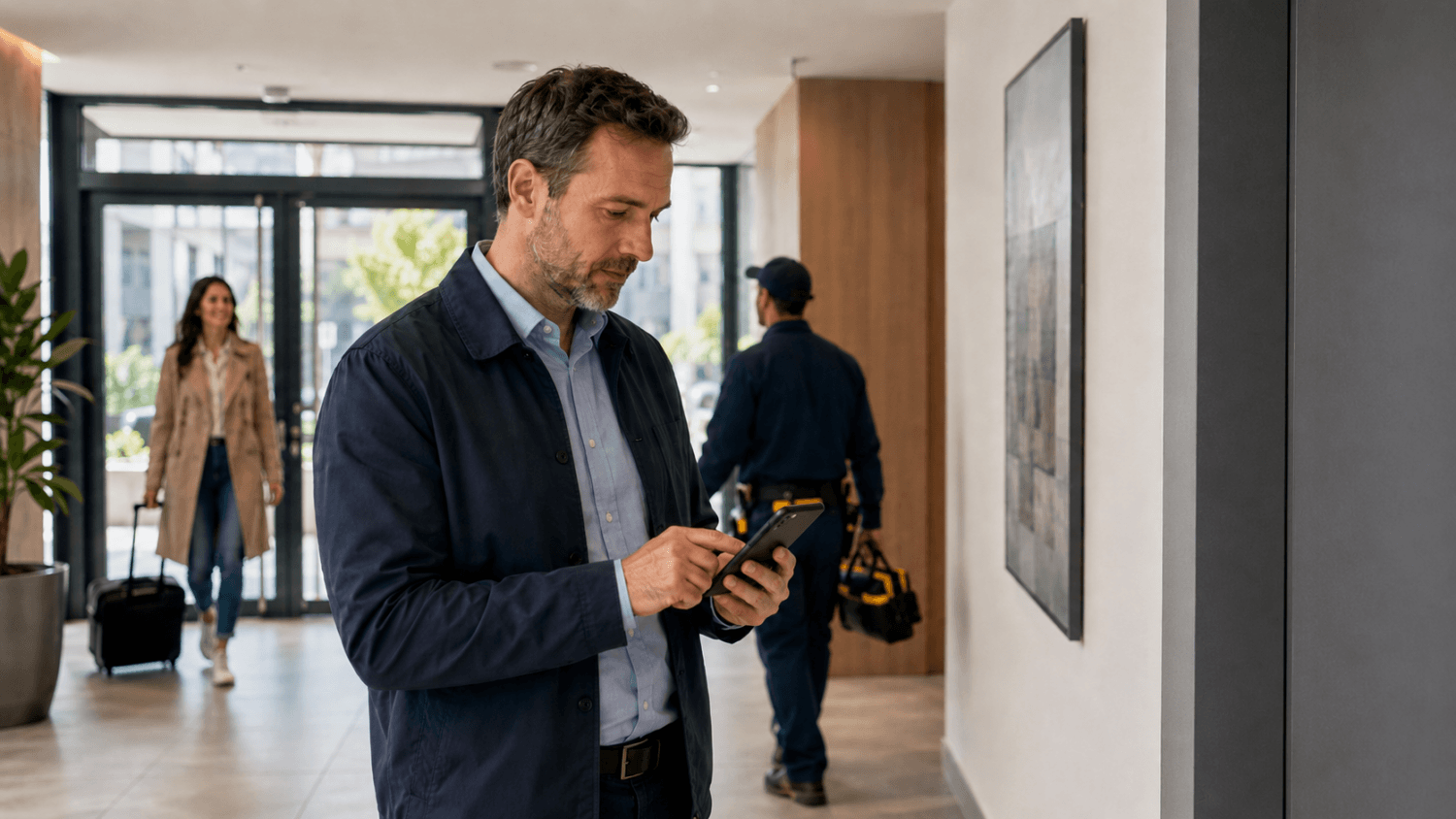
Have you ever wondered how digital access is changing the reality of building operations? We take a look at a day in the life of a building manager in today’s increasingly digital world.
Building managers rarely think about managing access when everything is working properly. Doors open, residents come and go, contractors complete their work, and daily operations run smoothly in the background.
The challenge is that access management is often most visible when something goes wrong.
A lost key. A resident lockout. A contractor arriving without the correct credentials. A former tenant who still has access. A maintenance visit delayed because nobody can locate the right key.
These small incidents may seem isolated, but across a busy residential property, office building, student housing complex, or mixed-use development, they quickly add up.
As buildings become more connected and user expectations continue to evolve, building managers are increasingly asking whether traditional key management is still fit for purpose – or whether a smarter approach can help reduce complexity and improve operational efficiency.
07:30 – Starting the day with a list of unknowns
A building manager checks their emails and sees several familiar requests:
- A new resident is moving in tomorrow.
- A maintenance contractor needs access to a technical room.
- A cleaning company has added a new employee.
- One tenant thinks they have lost their key.
None of these are unusual. In fact, they are part of everyday building operations.
The difficulty with traditional systems is that every access-related request often requires a manual process. Keys need to be collected, handed over, replaced, tracked, or physically updated.
For larger properties, managing access can become a job in its own right.
09:00 – The contractor arrives
A plumbing contractor arrives unexpectedly to investigate a reported issue.
With a conventional key-based system, the building manager may need to locate the correct key, coordinate collection, ensure it is returned, and hope it doesn’t get copied, misplaced, or forgotten.
In practice, these moments create friction. The challenge is not security alone. It is time.
Building management teams often spend significant effort coordinating access rather than focusing on higher-value tasks that improve the resident or tenant experience.
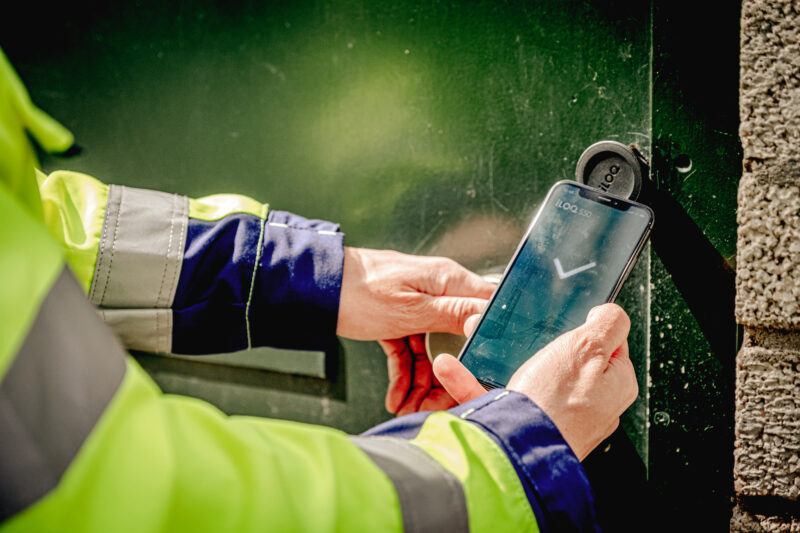
With modern smart-access solutions, temporary permissions can be issued digitally and removed when no longer needed. The contractor receives access only to the relevant areas and only for the required time period.
The result is not simply greater convenience. It is more controlled and accountable access management.
11:00 – Managing resident changes
Few environments experience access-related changes as frequently as residential properties and student housing. Residents move in. Residents move out.
The traditional process can involve collecting physical keys, changing locks, rekeying cylinders, issuing replacement credentials, and updating records. Every transaction carries an administrative overhead.
Digital access changes the equation. Instead of replacing hardware, access rights can be modified through software. Permissions can be activated, amended, or removed without changing the lock itself.
For building managers, this means less time spent handling keys and more confidence that access rights accurately reflect current occupancy.
13:00 – The missing key scenario
A resident calls. They cannot find their key. This is one of the most common access-management issues faced by property teams. The concern is not only inconvenience, but uncertainty and fears about security. Has the key genuinely been lost? Has it been copied? Who may have access now?
In a traditional environment, the response can be disruptive and expensive. Locks may need to be changed or rekeyed, and multiple residents may be affected.
Digital access systems offer a different approach. Instead of replacing hardware, a lost credential can often be disabled while a replacement is issued. The focus shifts from replacing physical infrastructure to managing permissions.
15:00 – Planning maintenance
Access management is closely tied to maintenance. Routine inspections, repair work, cleaning services, fire-safety checks, and regulatory compliance all depend on people accessing the right places at the right times.
In traditional systems, maintenance teams often carry large sets of keys or spend valuable time requesting access. Smart access creates opportunities to simplify these processes.
Access credentials can be linked to roles, schedules, or responsibilities rather than individual physical keys. This reduces administrative complexity while helping ensure that personnel only have access to the areas they genuinely need.
17:00 – Looking across multiple buildings
For managers responsible for multiple sites, complexity increases dramatically. Every building may have different users, contractors, schedules, and security requirements.
The question is no longer simply who has access to one door. It becomes:
- Who has access across the entire portfolio?
- Which permissions are still needed?
- Which credentials should be removed?
- How are access records maintained?
Modern cloud-based access management systems are increasingly helping organizations answer these questions from a single platform. Rather than travelling between locations or updating systems individually, administrators can manage access rights centrally and maintain visibility across multiple sites.
The bigger picture: Access as an operational tool
Historically, managing access has often been treated as a security function.
Today, many building owners are beginning to view it as an operational function as well.
The ability to manage access efficiently affects:
- Resident satisfaction
- Maintenance efficiency
- Contractor coordination
- Security outcomes
- Compliance and auditability
- Operational costs
As buildings become smarter, access management is increasingly becoming part of a wider digital ecosystem rather than a standalone system.
The most effective solutions support both security and usability while reducing the administrative burden placed on building teams.
Where smart access fits in
The growth of smart access reflects a broader shift within the built environment.
Building owners and operators are looking for solutions that are:
- Easier to manage
- More scalable
- More sustainable
- Better suited to changing user needs
Across the industry, access management is increasingly moving away from mechanical processes and toward digitally managed ecosystems. A range of technologies now support these goals, including mobile credentials, cloud-based access management, digital keys, smartphone access, key fobs, and integrated building-management platforms.
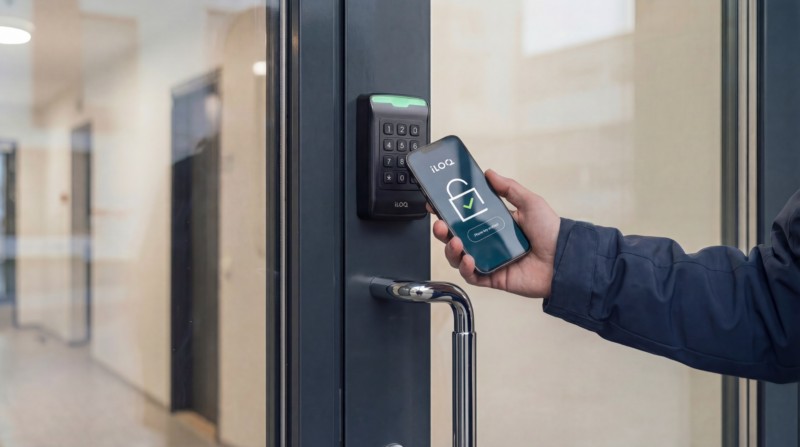
Among the providers operating in this space, iLOQ has taken a distinctive approach through battery-free smart locking solutions that combine digital access management with reduced maintenance requirements. Solutions such as smartphone-based access, programmable digital keys, and cloud-based administration demonstrate how access systems are evolving beyond traditional mechanical key management.
From managing keys to managing access
The daily reality of building management is not only about doors and locks. It is about people, processes, and keeping operations running smoothly.
Traditional key systems were designed for a world where access needs changed relatively slowly. Modern buildings operate differently. User groups change constantly. Buildings are more connected. Expectations are higher. Security requirements are more complex. As a result, many building managers are finding that the future is not about managing more keys; it is about managing access more intelligently.
And for an industry focused on efficiency, security, and the resident experience, that may prove to be one of the most significant shifts of all.
Who can I contact for more information?
If you’re a building manager looking to improve security, streamline access management and enhance the resident experience while reducing administrative burden and long-term operational costs, we’d be happy to discuss how digital access solutions can help. Get in touch to learn more.
Contact us
Contact your local iLOQ team for a free consultation.