The evolution of smart access: From mechanical keys to integrated ecosystems

For centuries, ensuring secure access relied on a simple object: the mechanical key. It was tangible, familiar, and universally understood. But it was also limited.
Keys could be lost, copied, stolen, or simply forgotten. As buildings grew more complex and security requirements more demanding, the shortcomings of traditional locks became impossible to ignore. What followed was a technological transformation that reshaped how we think about access.
From metal keys to early electronic locks
The first major shift came with electronic locks. Instead of relying on a mechanical key, these systems used, for example, keycards, PIN codes, or fobs. They introduced convenience and control: access rights could be updated without replacing hardware, and audit trails became possible. Yet these systems still had drawbacks. Cards were easily misplaced, batteries in cylinders needed replacing, and wiring added cost and complexity.
Still, electronic locks marked the beginning of a new mindset – access management was no longer just a mechanical function, but a digital one.
The rise of cloud-connected access
As cloud computing matured, access management systems evolved again. Cloud-connected platforms enabled remote management, real-time monitoring, and seamless integration with other building systems. Facility managers could update permissions from anywhere, automate workflows, and gain insights into how spaces were used.
This era introduced the idea of access as part of a broader digital ecosystem. Doors, sensors, cameras, and user directories could finally speak the same language. But even with these advances, one persistent challenge remained: power.
Most digital locks still relied on batteries or wired electricity. Batteries drained, maintenance schedules grew, and large portfolios of locks became costly to manage. The industry had solved the intelligence problem, but not the sustainability or maintenance problem.
iLOQ: The next logical step in smart access
Over 20 years ago, iLOQ took a fundamental leap forward by addressing the issue that has long held digital access back: the need for external power sources.
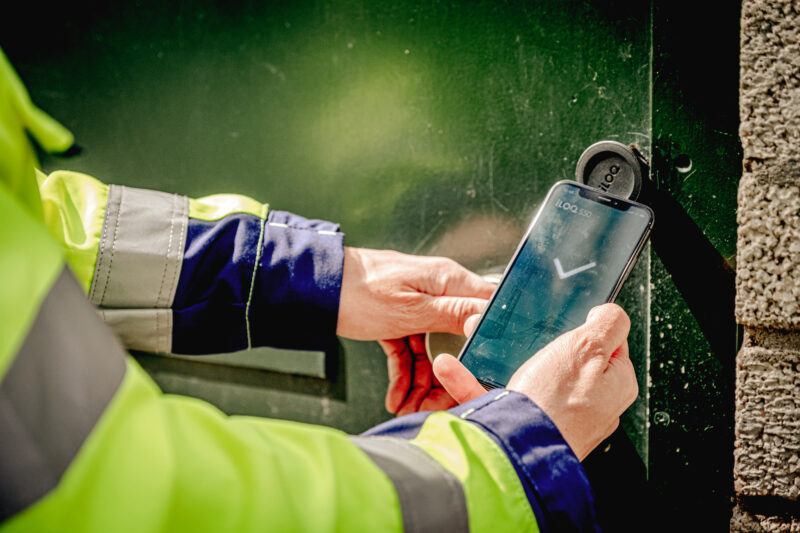
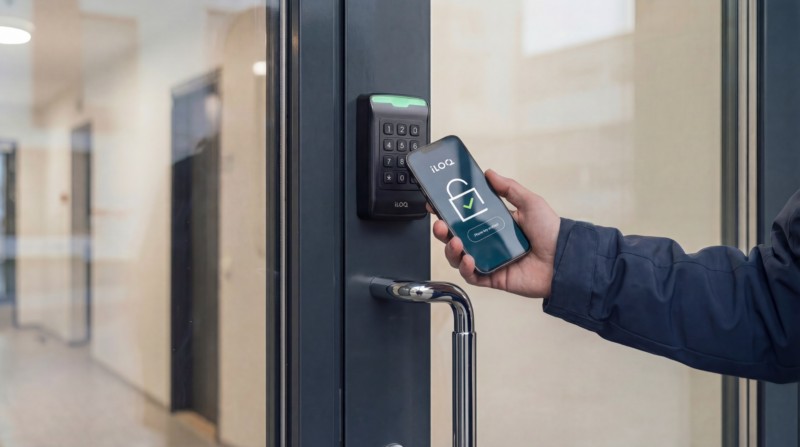
Instead of relying on batteries or wiring, iLOQ’s technology harvests energy from the user’s action – inserting a key or presenting a smartphone. This innovation removes two of the biggest pain points in access management:
- No batteries to replace, eliminating thousands of hours of maintenance work.
- No wiring required, reducing installation complexity and environmental impact.
By removing power dependency, iLOQ completes the evolution from mechanical keys to fully integrated, sustainable access ecosystems. It delivers the intelligence of cloudconnected systems without the operational burden that typically accompanies them.
A future built on integration, efficiency, and sustainability
The trajectory of access management is clear: systems are becoming smarter, more connected, and more sustainable. Mechanical keys served their purpose. Electronic locks expanded possibilities. Cloud platforms unlocked new efficiencies.
iLOQ brings the journey full circle by combining the reliability of mechanical systems with the intelligence of digital ecosystems – all while eliminating the maintenance overhead that has long been considered unavoidable.
In a world where buildings must be secure, efficient, and environmentally responsible, iLOQ isn’t just an upgrade. It’s the logical step forward in the evolution of smart access. Learn more here.