Defence Wins Matches. Access Control Protects Them.
As the 2026 World Cup gets underway across the USA, Canada and Mexico, the focus is naturally on the football. The players. The fans. The noise. The emotion. The moments people will remember for the rest of their lives.
But behind every major match is another story, a quieter one! One that most fans will never see, but every stadium owner, operator and security decision-maker understands.
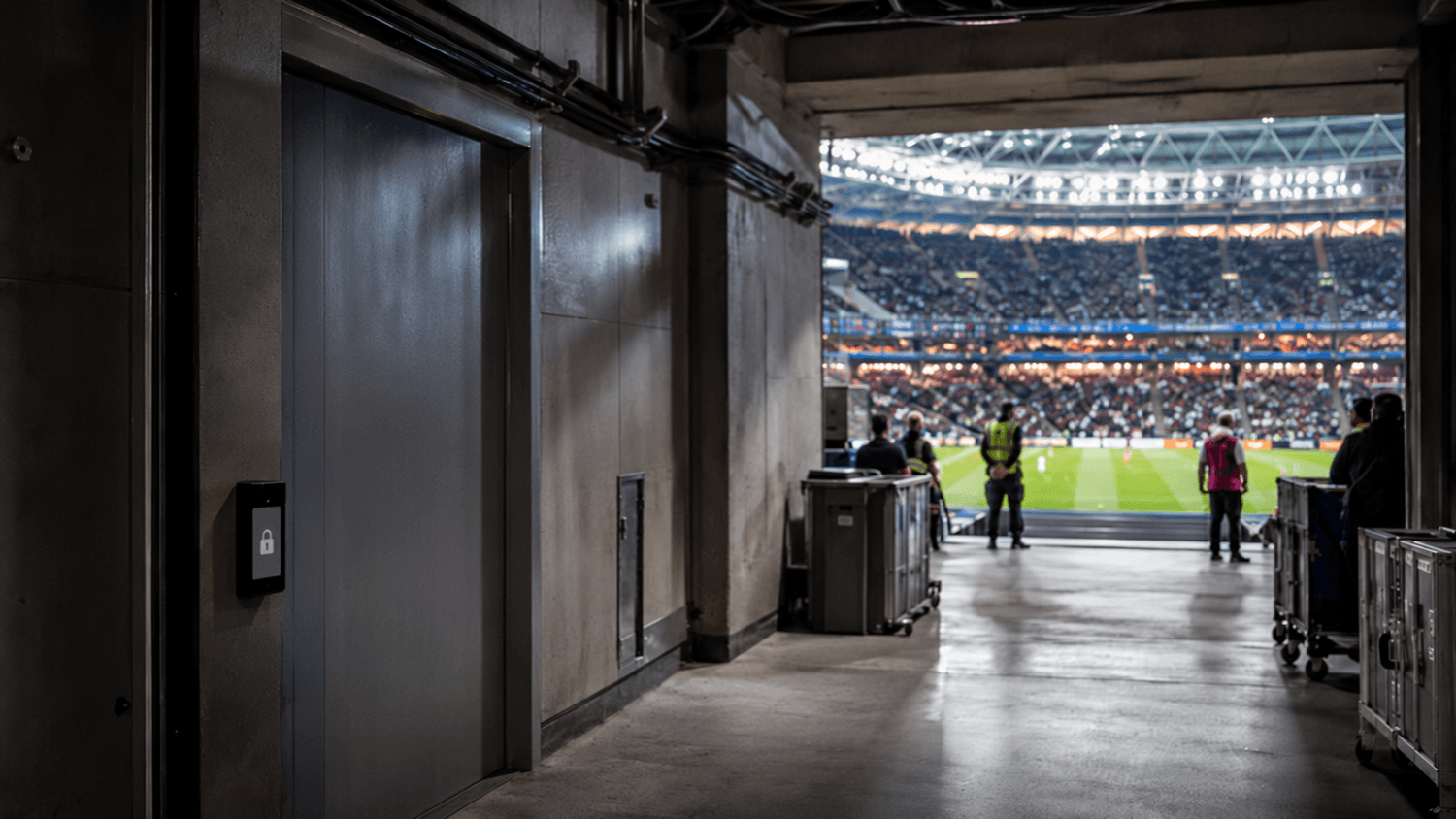
A World Cup stadium is not just a place where football happens. During a tournament of this scale, it becomes a temporary city. Thousands of people move through it every day, from fans, players and coaching staff to media teams, volunteers, vendors, VIP guests, security personnel, cleaning crews, catering teams, maintenance workers and international delegations. Each person needs to be in the right place at the right time. Just as importantly, they need to be kept out of the places they should not be.
That is where stadium security becomes much more than guards, cameras and turnstiles. It becomes a question of access.
At iLOQ, we are not claiming involvement in the 2026 World Cup. But the tournament is a powerful example of the access challenges modern stadiums face. It shows why smart access, digital access management and battery-free smart locking are becoming increasingly important for large venues where security, safety and smooth operations all need to work together.
The best stadium security is often invisible
For fans, a good matchday experience should feel easy. They arrive, find their gate, scan their ticket, buy food, take their seat and enjoy the match. If security is working well, most people do not notice the full extent of it.
That is how it should be.
The best stadium security is often the kind fans never see. It works in the background. It protects players’ areas, staff entrances, medical rooms, dressing rooms, storage spaces, VIP areas, service routes, technical rooms and restricted corridors. It helps ensure that people can move where they need to move, without slowing the whole stadium down.
For stadium operators, that balance is not easy. Too much friction can create delays, frustration and operational problems. Too little control can create risk. In a World Cup environment, where venues welcome international teams, global media, political attention, federation officials, sponsors and high-profile guests, that balance becomes even more important.
Security cannot be based on hope. It has to be built into the way the venue works.
Stadium security is about people
Modern stadium security is not only about protecting a building. It is about protecting people.
It is about the supporter arriving with their family and expecting the day to feel safe. It is about players being able to focus on the match. It is about staff moving quickly through busy service areas. It is about media teams, contractors, catering crews, volunteers and security personnel all doing their jobs in a venue where timing matters and pressure is high.
Most of that movement happens away from the cameras.
Behind the scenes, a stadium has to operate with discipline. The right people need to access the right areas, and restricted spaces need to stay protected. A dressing room, medical area, broadcast route, VIP space or service entrance cannot be treated the same as a public concourse. Each area has a different purpose, a different level of sensitivity and a different access need.
That is why access control matters so much.
Major stadium security is not only about reacting when something goes wrong. It is about reducing the chance of something going wrong in the first place. And in a venue as large and active as a World Cup stadium, that starts with knowing who can access which areas, when they can access them and how quickly those access rights can be changed.
Stadiums are complex long before kick-off
A World Cup match does not begin when the referee blows the whistle. For stadium operators, it begins days, sometimes weeks, earlier.
There is setup. Training. Media access. Broadcast preparation. Hospitality installation. Sponsor activity. Catering deliveries. Security checks. Technical testing. Team arrivals. VIP planning. Cleaning. Maintenance. Signage. Temporary infrastructure. Then, after the match, much of it has to be taken down, reset or prepared again.
Every stage brings different people into the stadium. Some are permanent staff. Some are temporary workers. Some are contractors who may only be on-site for one task. Some are part of international delegations, team operations or event production. In this kind of environment, access needs can change quickly.
Mechanical keys were not designed for that level of movement.
Keys can be lost. Keys can be copied. Keys can be shared. Keys can end up in the hands of people who no longer need them. And when a key is lost in a large venue, the issue is not only the key itself. It can mean uncertainty, extra administration, emergency procedures and, in some cases, the cost and disruption of replacing locks.
For a normal building, that is already a problem. For a stadium hosting one of the world’s biggest sporting events, it becomes a serious operational risk.
Why smart access fits the way stadiums work
Smart access gives stadium operators a more flexible way to manage security across complex venues.
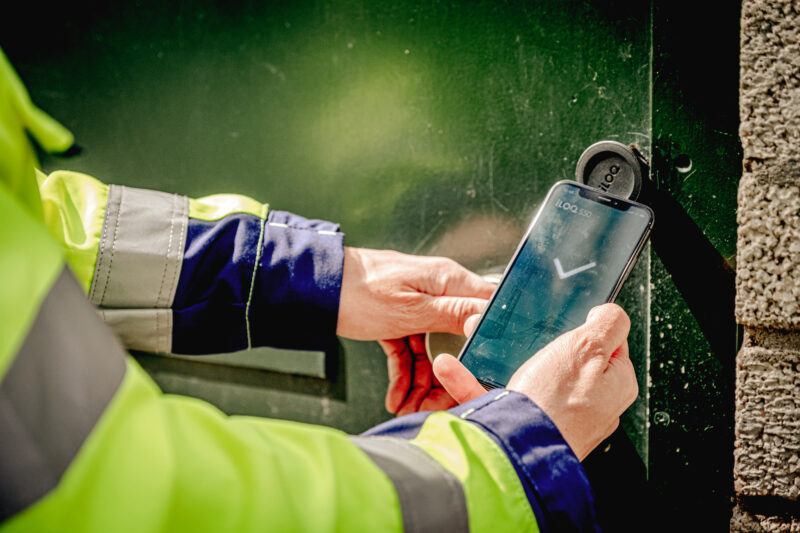
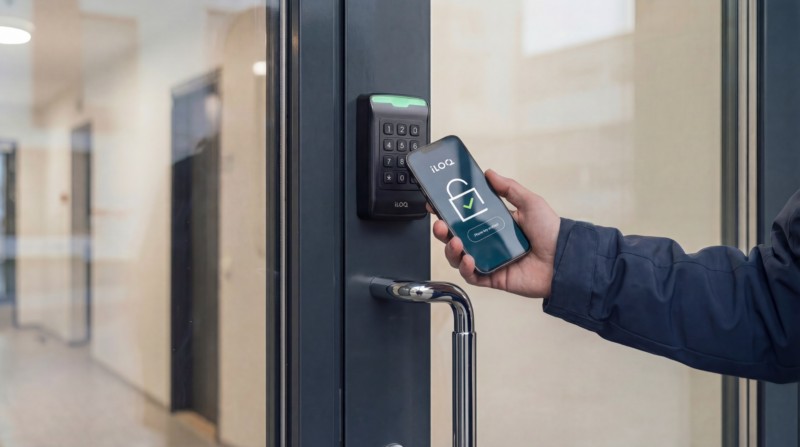
Instead of relying only on physical keys, access rights can be managed digitally. People can be given access to the spaces they need for their role. If their role changes, access can be changed. If they no longer need access, it can be removed. The process becomes less about handing out keys and hoping they come back, and more about managing access with greater control.
This matters in stadiums because not every person needs the same access. A catering worker does not need the same access as a player. A media crew does not need the same access as a medical team. A VIP guest does not need the same access as a facility manager. A contractor working on a service area does not need access to dressing rooms or team spaces.
In major venues, access control has to reflect real life. People move. Roles change. Schedules shift. Matchdays are intense. The access system should support that, not make it harder.
Mobile access and digital credentials can also help reduce the physical burden of key handling. In plain terms, stadium teams would not need to chase keys around the building in the same way. Access can be managed more intelligently, with the flexibility modern venues need.
Battery-free smart locking would reduce another stadium burden
In large stadiums, the number of access points can be huge. Doors, gates, service routes, hospitality areas, staff entrances and restricted spaces all need to be secured. If those access points rely on battery-powered smart locks, someone has to manage those batteries. Someone has to check them, replace them and plan maintenance around them.
That is not a small task in a venue with hundreds or even thousands of secured points.
This is where iLOQ’s battery-free smart locking approach is especially relevant. In venues of this size, battery-free smart locks would help reduce the maintenance burden compared with battery-powered systems. They would also help avoid the battery waste that can come with large-scale smart locking infrastructure.
For stadium owners and operators, that matters because security should not create unnecessary maintenance pressure. A smarter access system should improve control, but it should also make life easier for the people responsible for keeping the venue running.
That is an important part of the iLOQ story. Smart access should not only be secure. It should be practical, scalable and sustainable.
A real football reference: Borussia Mönchengladbach
iLOQ already has a strong reference in elite football. We secure Borussia Mönchengladbach, where the club’s stadium has been equipped with battery-free smart locks and digital access management.
That project shows how smart access can support a major football venue in real life. Players, staff and facility managers need simple, secure access to the right areas. VIP areas need flexible access for guests. Stadium operations need to run smoothly on matchdays and non-matchdays. Security needs to improve without making the fan experience feel heavy or complicated.
That is the point.
Modern stadium security should protect the venue without making the venue feel closed, difficult or intimidating. Fans should still feel the excitement. Players should still focus on the match. Staff should still be able to do their jobs. Facility teams should not be weighed down by outdated key management.
Smart access makes that balance easier to achieve.
The World Cup is a reminder of what stadiums are becoming
The 2026 World Cup is bigger than a football tournament. It is a reminder of what modern stadiums are becoming: international venues, media centers, hospitality hubs, political meeting points, entertainment destinations and high-pressure operational environments.
For stadium owners and operators, the lesson is clear. Security is not only about what happens at the public entrance. It is about the whole building. It is about every door that protects a sensitive area, every gate that controls movement, every staff route behind the scenes and every access decision that helps the day run safely.
A stadium can have world-class cameras, stewards and crowd management, but if access behind the scenes is still being managed with outdated mechanical keys, there is a gap.
The World Cup puts that gap into focus.
After the final whistle
When the final whistle blows, the security work does not stop. Fans leave. Teams move through restricted areas. Media continue working. Hospitality spaces are cleared. Cleaning teams enter. Equipment is moved. Maintenance begins. The stadium starts preparing for whatever comes next.
That could be another World Cup match, a league fixture, a concert, a private event or daily venue operations.
This is why better access management would not only matter for one tournament. It would support the long-term future of the stadium. It would help venues adapt to different events, different users and different levels of security, while keeping access simple for the people who need it.
For stadium owners, operators and security decision-makers, the message is not complicated. The bigger and more important the venue, the more important it becomes to control movement intelligently.
The 2026 World Cup will give fans unforgettable moments on the pitch. Behind the scenes, it also shows why stadium security needs to keep moving forward. At iLOQ, we believe smart access can help make that future more secure, more flexible and more sustainable.