Smart lock that opens with phone
Smart locks that open with a phone are no longer a niche idea. For many buildings, businesses and infrastructure environments, they are becoming a practical way to improve convenience, access management, security, and smart living without adding unnecessary complexity. At the same time, many people still have basic questions: what makes a lock smart, how does phone-based access work, where does it make sense, and what types of solutions are available?
People searching for a smartphone-based lock are often not just looking for a lock that opens with a phone. They are also trying to understand how these locks work, what makes them secure, where they are best used, and which type of solution fits their needs. Since “smart lock” can mean many different things, clear information helps customers compare options and make better decisions, whether they are focused on smart living, easier property management, or stronger security.
For iLOQ, smartphone-based access is part of a broader smart-locking approach. That means looking not only at the lock itself, but also at how access rights are managed, how users move through spaces, how security is maintained, and how different credentials can work together in one system. In many cases, the phone is an important part of the solution, but not the only one. Smart keys, key fobs, RFID and PIN-based access can also play a role depending on the use case.
This article explains what phone-based smart locks are, how they work, where they are most useful, and what types of iLOQ solutions may be relevant for customers looking for a smarter way to control access.
Are there smart locks that open with a phone? What makes them smart?
Yes, there are smart locks that open with a phone. In simple terms, a smart lock is a lock that uses digital access credentials and managed access rights instead of relying only on a traditional mechanical key.
A traditional lock and key system is fixed. If someone has the key, they can enter. If the key is lost, copied, or not returned, managing the risk can become difficult and expensive. A smart lock changes that by making access part of a digital system. Instead of relying on one physical key alone, access can be granted, updated, limited, or removed through software and managed credentials.
That does not mean a smart lock always works only with a phone. In many modern systems, the phone is one access method among several. Depending on the solution, users may unlock doors or other access points with a smartphone, smart key, key fob, RFID credential, or PIN. What makes the lock smart is not just the device used to open it. It is the fact that access can be managed more intelligently.
This is an important distinction. A lock is not smart simply because it has electronics. It becomes smart when it is connected to a broader access management approach that helps organizations and property owners control who can go where, when, and for how long. That is where the real benefits begin.
For iLOQ, this smart approach means combining secure locking hardware with digital access management and flexible credential options. So while many people search for a smart lock that opens with a phone, what they often really need is a smarter, easier, and more secure way to manage access across a property or portfolio.
How does a phone-based smart lock work?
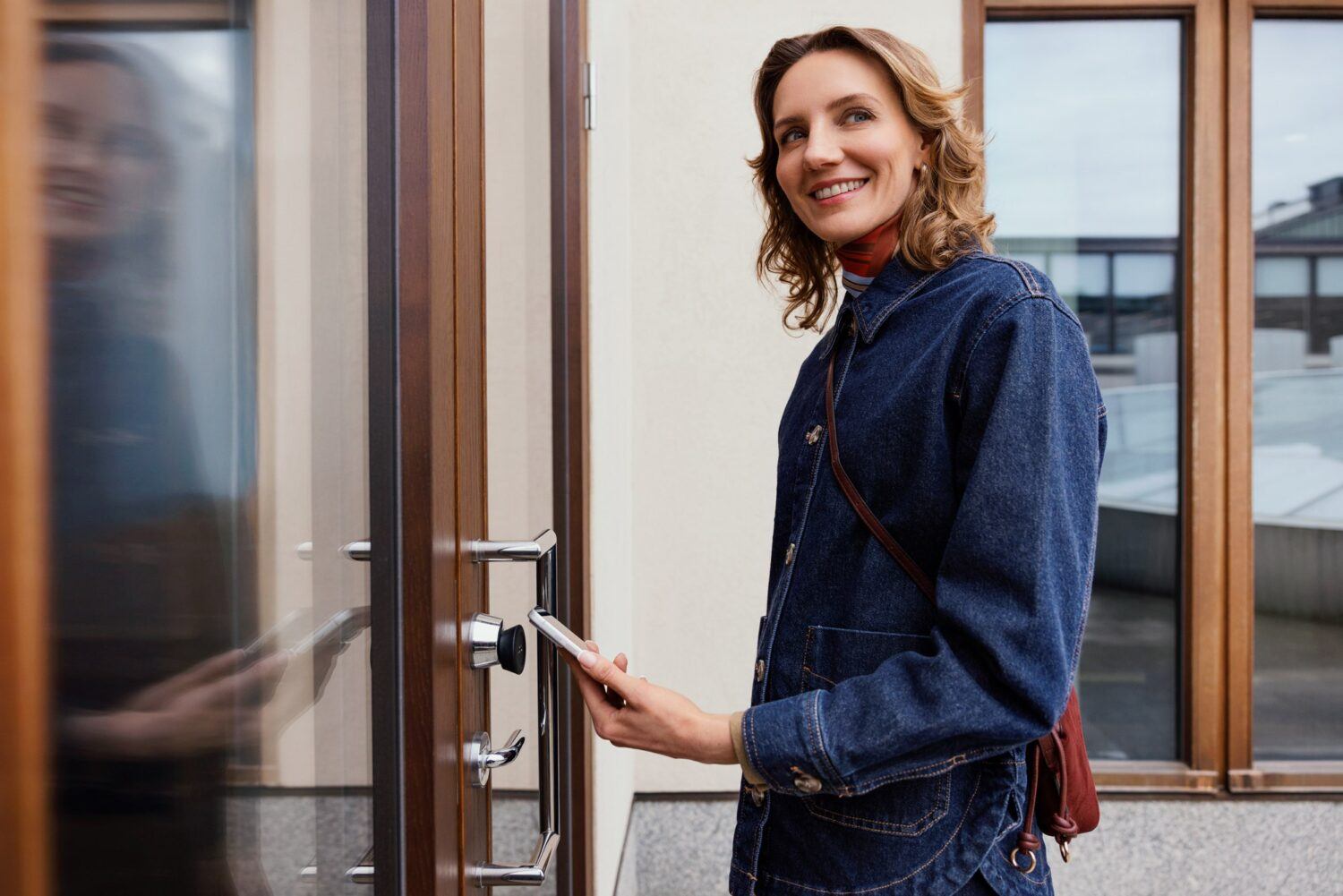
A phone-based smart lock works by turning an authorized smartphone into an access credential. When the user presents or uses the phone in the correct way, the lock recognizes that credential and allows access if the user has the required rights.
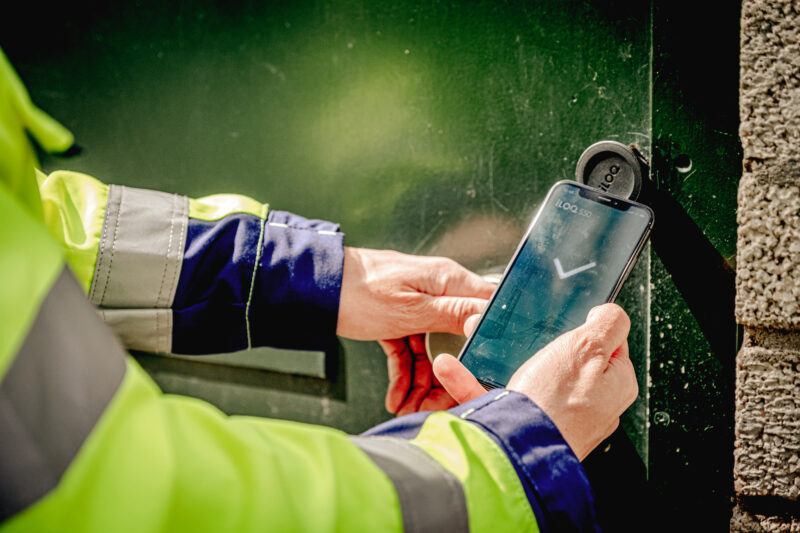
The exact way this happens depends on the system. Some phone-based locks use NFC, some use Bluetooth, and some may rely on other communication methods. In iLOQ’s case, smartphone access is used as part of a broader smart-locking ecosystem, and certain solutions are designed so the smartphone can act not only as the key, but also as the power source needed for unlocking. This removes the need for batteries and can make the solution especially attractive in environments where low maintenance is important.
Behind the user experience, there is also an access management layer. This is where administrators define who has access, to which doors or access points, and under what conditions. Access rights may be permanent, temporary, scheduled, role-based, or changed remotely as needs evolve. This is one of the main reasons organizations move away from purely mechanical systems.
In practice, a phone-based smart-lock setup usually includes three elements: the lock or reader at the access point, the phone or other credential used by the authorized person, and the software used to issue and manage access rights.
This means the phone is only one part of the solution. The bigger value comes from the fact that access no longer needs to be managed manually, one physical key at a time. Users get a more convenient experience, and administrators get better visibility and control.
Advantages of phone-based smart locks
One of the clearest advantages of phone-based smart locks is convenience. Most people already carry their phone every day, so using it as an access credential can feel natural and simple. There is less need to carry separate keys for every door or access point, and daily access can become faster and easier.
Another major advantage is better access management. With traditional keys, issuing access often means cutting, delivering, tracking, and collecting physical keys. With phone-based smart access, rights can be managed digitally. This can make it much easier to onboard new users, change permissions, support temporary access, and react quickly when circumstances change.
Security is also an important advantage. If a mechanical key goes missing, the consequences can be difficult to control. In a digital access system, permissions can be updated or removed more efficiently. This can reduce risk and improve confidence in how access is managed across a building, business, or distributed site network.
Phone-based smart locks can also support a better user experience across mixed environments. For example, one system may support mobile access for some users while also supporting smart keys, key fobs, RFID, or PIN access for others. This helps organizations avoid a one-size-fits-all approach. Different user groups can use the most practical method for their role and environment.
Another benefit is reduced complexity at scale. In a single-family home, convenience may be the main driver. In a multi-site business, housing company, office portfolio, or infrastructure network, the bigger value is often operational. Teams can manage access in a more unified way, reduce manual work, and improve how access fits day-to-day operations.
Phone-based smart locks can also support smart living by making everyday access simpler, more flexible, and easier to manage. For residents and users, that can mean a smoother daily experience. For property owners and managers, it can mean offering a more modern and connected way of living and working. In that sense, smart living is not just about convenience. It is also about giving people secure access that fits naturally into everyday life.
Retrofitting can also be an advantage, although it is not always the main focus. In many cases, customers want smarter access without major door changes, heavy cabling, or ongoing battery maintenance. This is especially relevant in existing buildings and environments where disruption needs to be minimized.
Where phone-based smart locks work best
Phone-based smart locks can be useful across many different environments, not just private homes. The right fit depends on the opening, the user group, and how access needs to be managed.
In residential environments, phone-based smart locks can help residents enjoy easier everyday access while helping property owners and managers handle access rights more efficiently. Apartment buildings, rental properties, student housing, and shared residential spaces may all benefit from digital access that is easier to manage than traditional keys. They can also support smart living by giving residents a more seamless and convenient way to move through shared and private spaces.
In commercial properties and offices, smart locks with phone-based access can support employees, site managers, service providers, and visitors. In these settings, convenience matters, but so does control. Access may need to change frequently based on role, schedule, or location.
Small businesses may also benefit, especially if they want a secure but manageable access solution without unnecessary complexity. In these cases, phone-based access can be appealing because it feels modern and easy to use, while still allowing the business to support other credentials where needed.
Public buildings and shared facilities are another relevant use context. Schools, healthcare environments, municipal buildings, and other public-facing spaces often involve multiple user groups with different access rights. A smart-locking approach can help keep this manageable while improving the experience for both users and administrators.
Critical infrastructure and distributed field environments are also highly relevant. Utility sites, telecom networks, cabinets, technical rooms, remote equipment locations, and service points often require secure access for mobile workforces. In these environments, low maintenance, reliable access, and strong control over permissions can be especially valuable.
Different types of customers may focus on different benefits. Residents may care most about convenience and smart living. Property managers may value easier administration. Maintenance teams may care about reliable, practical access in the field. Security-minded organizations may focus more on controlling and updating permissions. In reality, most projects involve a mix of these priorities.
This is why smartphone-based access should not be viewed only as a consumer feature. It can be part of a much broader access strategy that supports many verticals, user types, and property needs.
Types of smart locks that open with phone
There is no single type of smart lock that opens with a phone. Different access points need different hardware, and different environments may require different credential options. For customers evaluating iLOQ, the important thing is to match the solution to the use case.
Smart cylinders are one of the most familiar categories. These are often used on doors in residential, commercial, and shared-property environments. For customers looking for a smartphone-based lock for a standard door, this is often the most obvious place to start. Depending on the broader system design, cylinders may be part of a setup that supports phone-based access along with other credential types.
Smart padlocks are another relevant option. Not every access point is a traditional door. Gates, storage areas, hatches, fences, and remote sites may require a padlock rather than a cylinder. In these cases, a phone-based smart padlock can be a strong fit, especially when mobile access and flexible rights management matter.
Cam locks are relevant for smaller secured spaces such as lockers, cabinets, medicine storage, mailboxes, and similar compartments. These may not be the first product type people think of when searching for a smart lock that opens with a phone, but they can be an important part of a wider smart-access system.
Key tube locks are another specialized but useful category. These are relevant in scenarios where access to a stored physical key still needs to be controlled intelligently. This can be valuable in property, service, utility, or infrastructure contexts where third parties need secure access to keys at defined times.
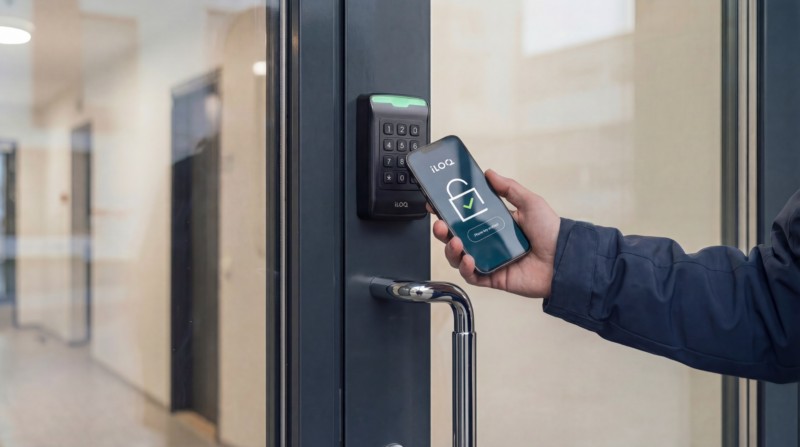
Readers also deserve a place in this discussion. In some environments, a door reader is a better solution than relying only on a lock cylinder. Readers can be especially useful where there is a need to support multiple credential types across a busy access point. In an iLOQ system, this can mean not treating the smartphone as the only answer, but as one credential among several.
This wider view is important because many customers do not actually need a smart lock that opens with a phone in the narrow sense. They need a smart access solution that includes mobile access where it makes sense, while also supporting smart keys, key fobs, RFID, or PIN access in the same ecosystem.
That is where iLOQ’s offering becomes especially relevant. Rather than treating mobile access as a standalone gadget feature, iLOQ positions it as part of a broader digital locking and access-management approach. That makes it possible to choose the right hardware and credential mix for each environment, while keeping the system manageable for administrators and practical for users.
FAQs
Are smart locks that open with phone easy to install?
Often, yes. Many phone-based smart locks are designed to be installed on existing doors or access points without major changes. However, the level of work depends on the lock type, the door, and the wider access system. Some installations are simple, while others require more planning.
Are smart locks that open with phone secure?
Yes, they can be highly secure when they are part of a properly managed digital access system. The main point is that security does not come only from the phone itself. It comes from the combination of secure hardware, controlled credentials, and the ability to manage access rights more effectively than with a purely mechanical system.
What happens if a phone with access goes missing?
This is one of the reasons digital access can be attractive. If a phone is lost, access rights can be managed through the system rather than leaving risk in place the way a lost physical key might. The exact response depends on the organization’s setup and access policies.
How do you grant and manage access rights with phone-based smart locks?
Access rights are typically managed through dedicated software. Administrators can assign permissions to users, define where they can go, and adjust rights when roles or needs change. This is one of the main operational advantages of smart-locking systems.
Do smart locks that open with phone only work with phones?
No. In many environments, the most practical solution supports multiple credential types. A system may include phone-based access for some users, while others use smart keys, key fobs, RFID credentials, or PIN-based access. This flexibility can be important in mixed-use properties and organizations with different user groups.
Are phone-based smart locks only for homes?
No. They can also be used in apartment buildings, offices, public buildings, shared facilities, technical spaces, cabinets, gates, remote sites, and critical infrastructure environments. In many cases, the strongest value appears outside the single-home context because digital access management can reduce manual work and improve control across many users and locations.
Is phone-based access better than a mechanical key?
Not in every situation, but it can offer clear advantages. Mechanical keys are familiar and simple, but they can be harder to manage when access needs change often. Phone-based and digitally managed access can improve flexibility, visibility, and control while still supporting a practical user experience.
Do all smart locks that open with phone need batteries or wiring?
No. Some do, but iLOQ’s smartphone-based smart locks do not. This is one of the key differences for customers comparing options. Instead of relying on batteries or heavy wiring, iLOQ’s approach is designed to reduce ongoing maintenance while still providing secure digital access.
Can phone-based smart locks be used as part of a larger access strategy?
Yes. In fact, that is often where they deliver the most value. Rather than thinking only about one door and one user, many customers benefit more from a system that supports multiple openings, multiple credential types, and centralized access management.