The hidden costs of traditional mechanical locks – and why battery‑free digital access solutions are the smarter choice

For decades (or even centuries), mechanical locks have been the default choice for securing buildings, assets, and infrastructure. They’re familiar, simple, and seemingly inexpensive. But beneath that surface lies a long list of hidden costs that property or site owners often underestimate.
As buildings become smarter and access requirements grow more complex, these traditional systems start to reveal their limitations. A closer look at the full lifecycle of mechanical locking shows that the real expense isn’t in the lock itself, it’s in everything that comes after.
1. Downtime: When access fails, operations suffer
Every time a lock jams, a key is lost or stolen, or a battery dies, the result is the same: downtime.
- Staff are locked out of critical areas
- Service teams must be dispatched
- Workflows grind to a halt
- Customers or residents experience delays
Downtime is more than an inconvenience – it’s a direct hit to productivity and service quality.
2. Changes in personnel or facilities: The cost of keeping access rights up to date
The ability to ensure the right people have access to the right places at the right times is essential to keep security levels high.
- In residential properties or student housing, for example, tenants change frequently
- In workplaces, facilities are often added or repurposed meaning that the people who don’t have access today, might need it tomorrow and vice versa
- Dealing with general staff turnover and a high number of external or 3rd-party contractors is a day-to-day task, for example, in critical infrastructure
Keeping access rights up to date is a costly and time-consuming headache for mechanical locking system administrators.
3. Maintenance labor: The hidden drain on resources
Mechanical locks require ongoing upkeep:
- Rekeying after lost or stolen keys
- Replacing worn cylinders
- Dispatching technicians for routine checks
- Managing physical key distribution and collection
These tasks add up quickly. What seems like a low‑cost lock becomes a high‑cost maintenance cycle, especially for organizations managing thousands of access points.
4. Battery waste: An environmental and operational burden
Even when mechanical locks are paired with electronic components or access control add‑ons, they often rely on disposable batteries. Across large portfolios – residential blocks, utilities, campuses – this creates:
- High battery consumption year after year
- Environmental waste that contradicts sustainability goals
- Unpredictable failures when batteries die at the worst possible moment or stop functioning due to weather extremes – both hot and cold
In an era where organizations are striving for greener operations, battery‑dependent locking systems feel increasingly outdated.
5. Lifecycle costs: The long tail of mechanical or battery-powered electromechanical locking
Mechanical locks may appear inexpensive upfront, but their total cost of ownership tells a different story. Over years of use, organizations face:
- Rekeying cycles
- Replacement hardware
- Labor hours
- Battery purchases
- Administrative overhead to keep access rights up to date
When multiplied across hundreds or thousands of locks, the financial impact becomes significant.
The smarter way forward: iLOQ’s battery‑free digital locking
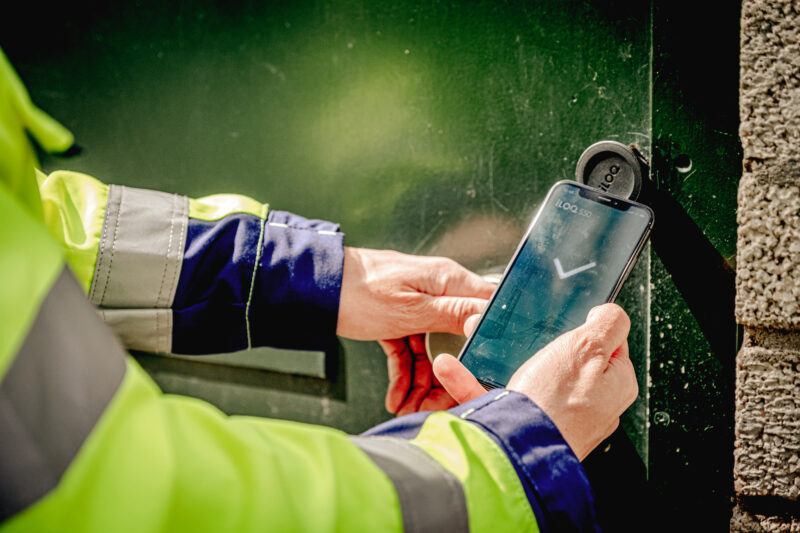
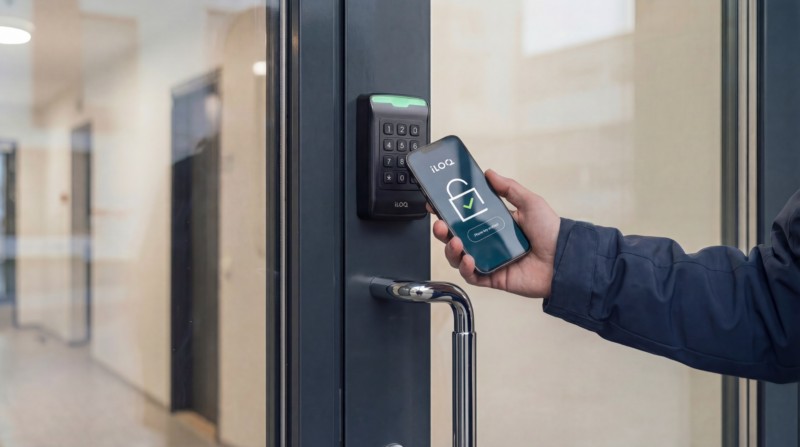
This is where iLOQ’s innovative approach changes the equation entirely. Instead of relying on mechanical keys or battery‑powered electronics, iLOQ delivers battery‑free digital locking that generates the energy it needs from the insertion of the key into the cylinder or from the NFC induction of a smartphone. The result is a system that eliminates the pain points of traditional locking:
- No batteries – ever
No waste, no replacements, no emergency failures.
- Minimal maintenance
Digital keys can be updated remotely, and access rights can be quickly and easily changed or cancelled without rekeying.
- Zero downtime from power issues
Energy harvesting ensures reliable operation without dependency on external power sources or batteries.
- Lower lifecycle costs
With fewer components to replace and no recurring battery expenses or complex electrical infrastructure, the long‑term savings are substantial.
Smarter access management
iLOQ’s cloud-based access management platform enables centralized and flexible control over who can access what and when – ideal for modern buildings, utilities, and critical infrastructure. With programmable cylinders and keys, access rights can be granted, updated and cancelled quickly, easily and remotely to keep security levels high.
The future of smart access is battery‑free
As organizations modernize their security strategies, the shift from mechanical locks to smart access solutions is accelerating. iLOQ’s battery‑free digital locking and mobile access technology offers a sustainable, cost‑efficient, and future‑proof alternative that removes the hidden burdens of traditional systems. Mechanical locks had their moment. Now it’s time for a smarter, cleaner, more efficient and cost-effective approach to access management.