What is a smart door reader and how do you choose the right one?
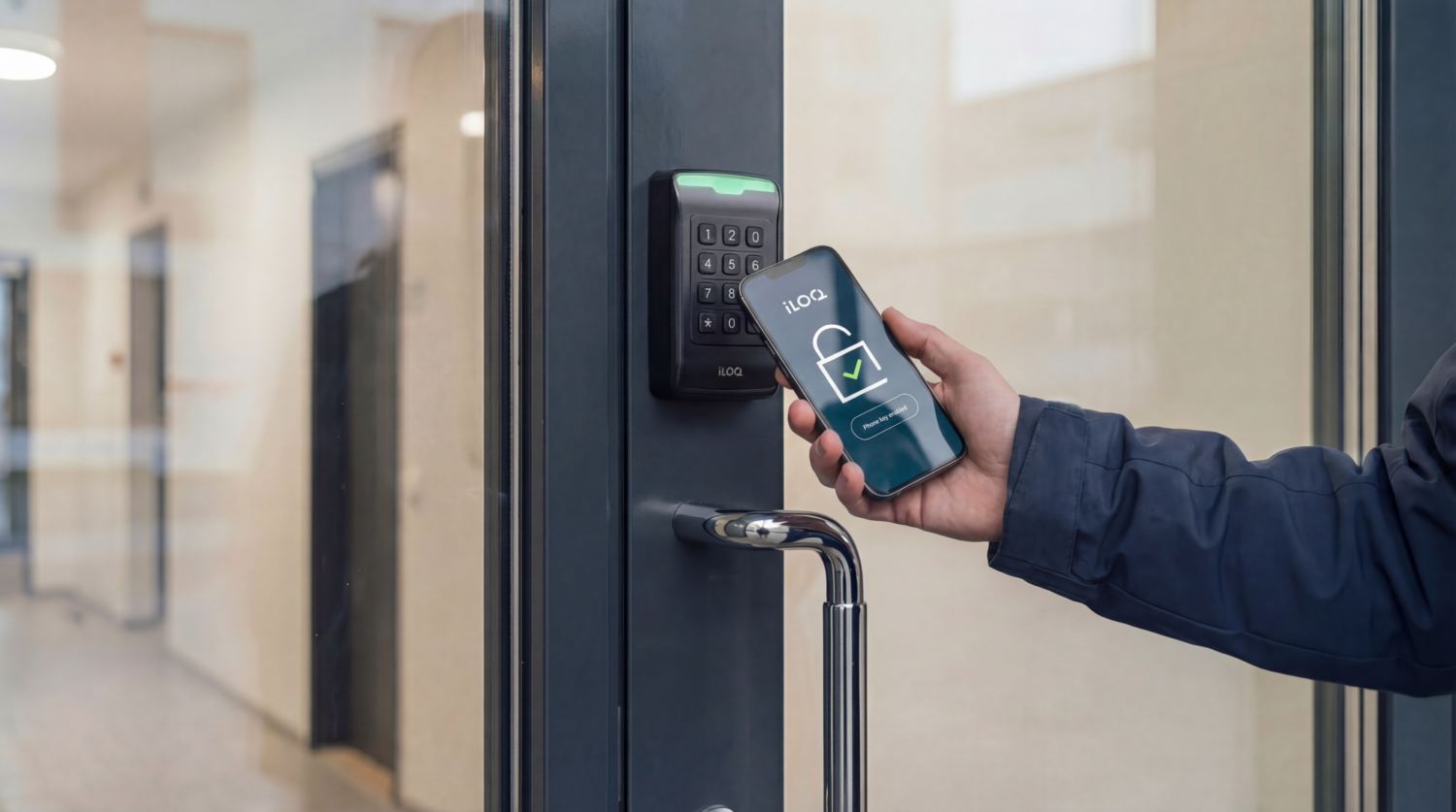
Smart access is changing the way people move through buildings. Instead of relying only on mechanical keys, many properties now use digital credentials, mobile keys, PIN codes, RFID tags or key fobs to control who can enter, when they can enter, and how access can be managed. At the center of many of these systems is the smart door reader.
A smart door reader is the device installed near a door that reads a person’s credential and helps decide whether access should be granted. It may look simple from the outside, but it plays an important role in the wider access control system. It connects the physical door to digital access rights, user management, audit trails and, in many cases, remote administration.
For building owners, property managers, facility teams and critical infrastructure operators, the question is not only “What is the best smart door reader?” The better question is: which smart door reader is right for this door, this building, this user group and this operating model?
That is where the real value of smart access begins.
What is a smart door reader?
A door reader is a device installed near a door, gate, entrance, elevator, garage or secured area. Its job is to read an access credential and communicate with the access control system.
That credential might be a card, key fob, digital key, mobile phone, RFID tag or PIN code. When the user presents the credential, the reader checks the information and the system decides whether the person has permission to enter.
A traditional door reader usually performs a simple task: it reads a card or tag and passes the information to a controller. A smart door reader goes further. It can support multiple credential types, communicate with access management software, help update access rights, provide better user feedback and support a more flexible security model.
In simple terms, a normal reader reads. A smart door reader reads, verifies, communicates and supports smarter access management.
For example, in an iLOQ smart access system, a reader can be used with different digital credentials depending on the solution. These may include iLOQ S5 keys, mobile keys, key fobs, RFID tags and PIN codes. This gives organizations more flexibility than a one-size-fits-all access method.
A smart door reader is not just about opening a door. It is about making access easier to manage, easier to update and easier to monitor. And, more importantly, buildings more secure.
How does a smart door reader work?
The basic process is simple. A person arrives at a door and presents their credential. This might mean tapping a key fob, holding a digital key near the reader, using a smartphone, entering a PIN code or presenting another approved credential.
The smart door reader captures the credential information and communicates with the access control system. The system checks whether the credential is valid, whether the user has permission for that specific door and whether the access request matches any time restrictions or user rules.
If access is approved, the system releases the electric lock, strike plate, magnetic lock or other locking hardware connected to the door. If access is not approved, the door remains locked.
In more advanced systems, this process can also update information at the same time. Access rights can be changed, blocked credentials can be recognized, and audit trail information can be collected or transferred. This is where the smart door reader becomes part of a wider digital access ecosystem rather than a standalone device.
Some smart door readers work online. This means they are connected to a network and can communicate with the access management platform in real time. Others can work as part of a hybrid or offline-capable system, where access decisions and updates are managed without every door needing a constant live connection.
This is especially important in large buildings, older properties, remote sites and critical infrastructure. Not every access point has reliable power, cabling, internet or Wi-Fi. A good smart access system should be designed around the real conditions of the site, not only the ideal conditions of a new building.
With iLOQ, smart door readers are part of a wider battery-free and digitally managed access ecosystem. Depending on the system configuration, they can support different access methods, help update credentials and connect access points to cloud-based management.
Advantages of smart door readers
The main advantage of a smart door reader is control. Mechanical keys are familiar and simple, but they are difficult to manage at scale. If a key is lost, copied or not returned, the security risk can be difficult and expensive to resolve.
A smart door reader helps move access from a physical key-only model to a managed digital model.
Easier access management
With smart access, access rights can be created, updated or removed digitally. This is useful when people move in or out, staff roles change, contractors need temporary access or different users need access to different parts of a building.
Instead of replacing locks or collecting keys, administrators can manage permissions through the system.
Better security
A smart door reader supports more controlled access. Users can be given specific rights for specific doors, buildings, times or areas. Lost credentials can be blocked. Access events can be recorded, giving administrators better visibility into who accessed what and when.
This is especially valuable in environments where accountability matters, such as public buildings, commercial properties, student housing, utilities, telecom sites, energy facilities and shared residential buildings.
More credential choice
Not every user wants to access a building in the same way. Some prefer a digital key. Some prefer a phone. Some need a key fob. Some access points may require a PIN code for additional control.
A smart door reader can support different user needs without forcing the entire property into one access method.
This flexibility is important for mixed-use buildings, residential properties, commercial offices and public environments where user groups can be very different.
Better user experience
For residents, employees, service providers and visitors, access should feel smooth. A smart door reader can reduce friction at shared doors, entrances, elevators and frequently used access points.
The best smart door reader is not always the one with the longest feature list. It is the one that makes access simple for authorized users while keeping the building secure.
Lower lifecycle costs
Traditional systems can create hidden costs. Rekeying, battery replacement, manual key handling, access administration and on-site maintenance all take time and money.
Smart access can reduce these costs by making access rights easier to manage and by reducing the need for physical key logistics. iLOQ’s battery-free approach also helps reduce maintenance needs by removing the requirement for batteries in locks.
Stronger auditability
In many organizations, knowing who has access is not enough. Teams also need to know when access was used, where it was used and whether access rights are still appropriate.
Smart door readers can support audit trails and access event visibility, helping organizations improve security, compliance and operational control.
Use contexts for smart door readers
Smart door readers are useful wherever access needs to be secure, flexible and easy to manage.
Residential properties
In apartment buildings, student housing and rented properties, access rights change regularly. Residents move in and out. Maintenance teams need access. Cleaners, delivery services and contractors may need temporary or limited access.
A smart door reader can make shared entrances, garages, storage areas, laundry rooms and common spaces easier to manage.
For property managers, this can reduce key handling, improve the resident experience and make access administration more efficient.
Public and commercial buildings
Offices, schools, healthcare facilities, municipal buildings and retail spaces often have many users with different access needs.
A smart door reader can help separate public areas from restricted areas, manage staff permissions, support visitor access and reduce the risk created by lost or copied keys.
For facility managers, the benefit is not only security. It is also time. Access rights can be updated faster and managed more consistently across the building.
Critical infrastructure
Critical infrastructure environments need reliable, secure and traceable access. This includes energy, telecom, water, transport and other essential services.
Many of these sites are remote, distributed or exposed to demanding outdoor conditions. Access may need to work even where internet, Wi-Fi or power infrastructure is limited.
For these environments, smart access is not about adding a gadget to a door. It is about improving operational resilience. The right smart door reader can support controlled access, auditability and secure administration across many locations.
Shared doors and high-traffic entrances
Smart door readers are especially useful at doors used by many people. These may include main entrances, staff doors, gates, parking areas, amenity spaces, elevators and internal security zones.
The more people use a door, the more important it becomes to manage access efficiently.
Retrofit projects
Many buildings were not originally designed for modern access control. That does not mean they cannot be upgraded.
Smart door readers can be part of retrofit projects where the goal is to modernize access without rebuilding the entire property. The right solution depends on the existing door hardware, wiring, access needs and long-term management model.
Types of smart door readers
There are several types of smart door readers. The right choice depends on how the door is used, who uses it and what level of control is needed.
NFC smart door readers
NFC readers allow users to present compatible NFC-based credentials near the reader. This can include digital keys, phones, key fobs or tags, depending on the system.
In iLOQ’s product range, NFC readers play an important role in creating smooth, secure access for frequently used doors. iLOQ Readers use NFC technology to read and write data to compatible iLOQ credentials and can support different access methods depending on the product and system setup.
Suitable iLOQ product pages to connect from this section include Smart Keys & Locks.
PIN-based smart door readers
Some smart door readers include a keypad. This allows access with a PIN code, or with a combination of credential and PIN.
PIN-based access can be useful for shared areas, service access, temporary access or situations where an additional layer of control is needed.
iLOQ offers reader options with PIN functionality, giving organizations more flexibility when designing access for different doors and user groups.
Hybrid smart door readers
A hybrid reader supports more than one type of credential. This might include a digital key, mobile key, key fob, RFID tag or PIN code.
For many organizations, this is the most practical option. Different users may need different access methods, and buildings often include a mix of residents, employees, contractors, visitors and service providers.
A hybrid smart door reader gives the system more flexibility and helps avoid forcing every user into the same behavior.
iLOQ’s S55 Hybrid Readers are a strong example of this approach. They are designed as part of the iLOQ Online system and support flexible access in environments where different credential types may be needed.
RFID smart door readers
RFID readers use radio frequency identification to read tags, cards or fobs. They are common in access control and can be used for many types of doors and buildings.
RFID can be simple and familiar for users. However, the security level depends on the technology, credential type and system design. For higher-security environments, it is important to understand how credentials are protected, how access rights are managed and how lost credentials are blocked.
Mobile credential readers
Mobile credential readers allow users to open doors with a smartphone or wearable device. This can make access more convenient, especially in residential, commercial and campus environments where users already rely on mobile devices for everyday services.
Mobile access can also simplify administration. Digital credentials can often be issued, updated or removed without handing over a physical item.
The important point is that mobile access should be part of a secure, managed system. A phone should not simply replace a key. It should improve the way access is controlled.
Biometric smart readers
Some smart door readers use biometric authentication, such as a fingerprint or facial recognition.
These can be useful in specialist environments where the organization wants to verify that the person presenting the credential is the correct person. However, biometric systems also introduce additional privacy, compliance and data protection requirements.
For many access needs, a well-managed digital key, mobile credential, key fob or PIN-based solution may provide the right balance of security, usability and privacy without needing biometric data.
Video and intercom readers
Some smart door readers include a camera, intercom or visitor management function. These are often used at main entrances where remote visitor communication is needed.
This can be useful for buildings with reception areas, visitor traffic or delivery access. However, not every door needs video surveillance. In many cases, the better solution is to separate access control from video surveillance and design each layer around the real security requirement.
The best smart door reader is not automatically the one with the most features. It is the one that fits the door, the user flow and the risk level.
What does iLOQ offer for smart door readers?
iLOQ provides smart access solutions designed to make access secure, flexible and easier to manage across residential properties, public and commercial buildings, and critical infrastructure.
Within the iLOQ ecosystem, smart door readers can support different digital access methods and help connect frequently used doors to a wider access management platform.
Relevant iLOQ solutions include:
- iLOQ 5 Series for flexible smart access management across different types of buildings and users.
- iLOQ Smart Keys & Locks for understanding the wider ecosystem of keys, locks, readers and access management.
- iLOQ NFC Door Readers and NFC/PIN Readers for doors where fast, flexible access is needed.
- iLOQ S55 Hybrid Readers for environments that need multiple credential options and smart online functionality.
- iLOQ Smart Access Platform for organizations looking to upgrade existing buildings to digitally managed access.
- iLOQ solutions for residential properties, public and commercial spaces, and critical infrastructure for more sector-specific guidance.
Together, these solutions help users move beyond traditional key-based access and toward a smarter model where access can be managed, updated and monitored more efficiently.
FAQs
Are smart door readers easy to install?
Smart door readers can be straightforward to use, but installation should be handled by a qualified professional. The reader needs to work correctly with the door hardware, access control system, locking device and power or network setup.
In retrofit projects, the installation approach depends on the existing building and door environment. iLOQ works through authorized partners who can help assess the site, recommend suitable products and handle installation, service and maintenance.
Are smart door readers secure?
Yes, smart door readers can be very secure when they are part of a well-designed access system.
Security depends on the credential technology, reader communication, system configuration, access rights management and how quickly lost or outdated credentials can be blocked.
A smart reader should not only open a door. It should support secure access decisions, controlled permissions and reliable administration.
Do smart door readers need an internet connection?
Not always. Some smart access systems use online readers, while others can operate in offline or hybrid environments.
Connectivity can enable real-time updates, remote management and faster event visibility, but not every door needs to be permanently online. The right setup depends on the building, the door, the level of risk and the need for remote control.
This is especially important for critical infrastructure and remote sites where internet or Wi-Fi may not always be available.
What is the best smart door reader?
The best smart door reader is the one that fits your access needs.
For a busy residential entrance, the best option might be a reader that supports mobile keys, key fobs and PIN codes. For a critical infrastructure site, the priority may be resilience, audit trails and reliable operation in demanding conditions. For a commercial building, the main requirement may be easy user management across staff, visitors and contractors.
Instead of choosing based only on features, consider the door type, user groups, credential options, management requirements, installation environment and long-term maintenance needs.
Can a smart door reader replace mechanical keys?
In many cases, yes. A smart door reader can reduce or remove the need for mechanical keys at specific doors, especially shared entrances or high-use access points.
However, the best solution may also combine different access technologies. Some doors may use smart readers, while others may use digital lock cylinders or other smart locking products. The goal is to build an access system that fits the whole property, not only one door.
Are smart door readers suitable for older buildings?
Yes, smart door readers can be suitable for older buildings, especially when the solution is designed with retrofit in mind.
Older buildings often have different door types, wiring limitations and installation constraints. A professional assessment helps identify which doors should use readers, which should use smart cylinders and which access points need additional hardware.
Can smart door readers support temporary access?
Yes. One of the main benefits of smart access is the ability to manage temporary or time-limited permissions.
This is useful for contractors, maintenance teams, cleaning services, visitors and short-term users. Access can be granted for the right door, for the right time, and removed when it is no longer needed.
Who should I contact for more information or a proposal?
For more information, contact iLOQ or your local authorized iLOQ partner. They can help assess your building, understand your access needs and recommend the right smart access solution for your environment. A smart door reader may be a small device on the wall, but it can have a big impact on how secure, efficient and future-ready a building becomes.
Contact us
Contact your local iLOQ team for a free consultation.